

Think You Don’t Need to Engage Residents? The Data Center Uproar Says Otherwise.
The growing backlash over data centers offers public officials a powerful lesson about meaningful community engagement.
By: Jacqueline Rachev, MNA, APR
Senior Account Supervisor, Nonprofit, Business and Government
Summary: Communities across the country are pushing back against data center proposals they believe advanced without sufficient public input. Their response is a reminder that public notice alone is not engagement: Residents need clear information, opportunities to participate and evidence that their concerns were considered.
Data centers are making headlines, fueling debate among local and state officials and prompting residents to organize. Whether you support or oppose data center development is not the point. What matters is that residents increasingly feel left out of decisions that could significantly affect their communities.
During a recent Grayslake (Illinois) Village Board meeting, resident Ami Frick distilled the challenge facing public officials into three sentences: “People can forgive disagreement. They can even forgive difficult decisions. What they don’t forgive is feeling that their voices never mattered.”
That distinction often gets lost in debates about community engagement. Engaging residents does not mean promising them their preferred outcome. It means giving them a meaningful opportunity to inform the decision, understand how it was reached and see how their concerns were considered.
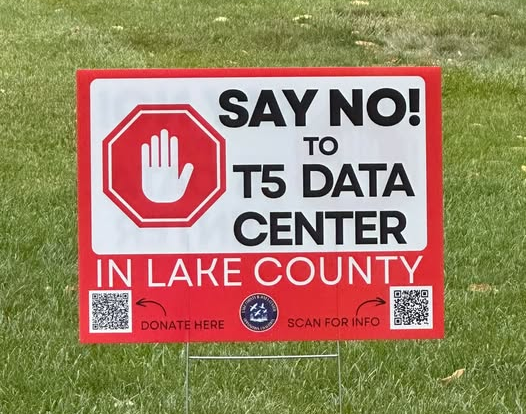
Data Center Opposition Is Becoming a National Trend
The situation in Grayslake is not an isolated case. Communities across the country are grappling with data center proposals, and the development pipeline continues to grow. A July 2026 Wood Mackenzie report put the disclosed U.S. data center development pipeline at 331 gigawatts, including 36 gigawatts of proposed capacity added during the first quarter.
As local leaders consider zoning changes, tax incentives and other approvals, residents concerned about utility costs, water use, noise, land use and decision-making processes are organizing and calling for greater transparency. By the end of March 2026, Data Center Watch had identified 833 active opposition groups across 49 states – more than twice as many as it counted just three months earlier. On July 18, opponents held 142 protests across 42 states in the first coordinated national campaign against data center expansion, according to Reuters.
The consequences are increasingly difficult to ignore. U.S. data center project cancellations more than quadrupled from six in 2024 to 25 in 2025, according to research from Baird cited by Utility Dive. Although community opposition was not the only reason projects were cancelled, public sentiment has become a significant development risk.
In Virginia, a proposed 23 million-square-foot data center complex collapsed after courts found that the county had failed to meet public-notice requirements. In Florida, state leaders enacted legislation protecting local authority to reject projects and requiring greater public disclosure of development agreements.
What does meaningful engagement look like? As Frick reminded village trustees, public notice should be “meaningful – not simply the minimum required by law.” Public service, she said, means “welcoming questions, encouraging participation and earning trust – not just expecting residents to simply give it.”
Here are several ways public officials can put that principle into practice:
- Explain how policies are developed, projects are evaluated and decisions are made.
- Clearly identify what has already been decided, what remains open to public input and who has decision-making authority.
- Use your website as the primary source of current, factual information, including potential impacts on the community.
- Hold town halls or other community information sessions.
- Host listening sessions throughout the community, varying the days, times and locations to reach people with different schedules.
- Provide fact sheets and Frequently Asked Questions online and at key community locations.
- Share updates at key decision milestones, including what was decided, why and what happens next.
Engaging your community will not eliminate controversy or provide consensus. It will create a process residents can understand and recognize as credible. If public bodies do not create real opportunities for residents to participate in consequential decisions, residents will create their own. By then, anger may have grown, positions may have hardened and the opportunity for constructive dialogue may have passed.
If your organization is preparing to make an important decision, let’s talk about how to meaningfully engage your community throughout the entire process.
Jacqueline Rachev, MNA, APR, is a senior account supervisor at Public Communications Inc., where she develops and leads community engagement and communications strategies for park districts, school districts and other public sector organizations. She has more than 25 years of experience helping public agencies strengthen trust, navigate complex issues and engage residents on matters that shape their communities.
Author